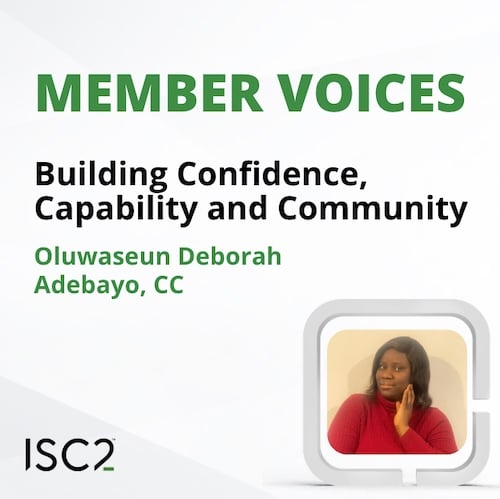
Cybersecurity is often framed as a technical discipline. But at its core, it’s a human discipline, rooted in trust, responsibility and the protection of people as well as systems, says Oluwaseun Deborah Adebayo, CC. Her journey into cybersecurity began with curiosity about how technology works, but it evolved into purpose when she recognized the broader impact security has on organizations, education and society.
 Disclaimer: The views and opinions expressed in this article belong solely to the author and do not necessarily reflect those of ISC2.
What initially drew me to cybersecurity was problem-solving and systems thinking. What has kept me in the field is its relevance and responsibility. As digital systems become central to how we learn, work and govern, cybersecurity plays a critical role in ensuring these systems remain safe, resilient and trustworthy. The field’s constant evolution has also reinforced the importance of continuous learning, both technical and professional.
Overcoming Misconceptions
One of the most misunderstood aspects of cybersecurity is the belief that it is purely technical. While technical depth is essential, effective cybersecurity also depends on communication, education and strategic thinking. As a woman in the field, I’ve sometimes seen these strengths undervalued, despite their importance in translating complex risks into actionable decisions for leaders, educators and users.
Another misconception is the narrow image of who belongs in cybersecurity. The field benefits from diverse backgrounds and perspectives, those who understand human behavior, learning, governance and organizational change alongside technology.
However, there’s been visible progress in inclusion and awareness across the cybersecurity industry; conversations around mentorship, flexible career paths and representation are more common today than in the past. This progress is not consistent across all organizations or career levels. Inclusion requires sustained commitment, not assumptions; where organizations intentionally invest in people and pathways, culture improves – and, where they do not, barriers remain.
The two things that have made the greatest difference in my career are mentorship and access to learning opportunities. Mentors who shared honest advice and offered guidance during critical moments helped me build confidence and clarity. Equally important has been organizational support for professional development, certifications, training and real-world application. Together, these have enabled me to translate knowledge into impact.
I’ve found that being successful in cybersecurity depends on both technical and non-technical skills. Alongside technical expertise, the ability to communicate clearly, think strategically and adapt continuously has been critical. Explaining risk to non-technical stakeholders, designing security solutions that align with organizational goals and staying curious in a rapidly changing field are essential capabilities.
Nonetheless, earlier in my career, there were moments when I felt I needed to go the extra mile to achieve some objectives. Preparation, consistency and delivering results became my way of building credibility. These experiences highlighted unspoken barriers, such as limited sponsorship and assumptions about readiness, that still affect progression, particularly for women at mid to senior levels.
How To Move the Industry Forward
Yes, mentorship is important, but sponsorship is transformative. Women benefit most when leaders actively advocate for them, recommend them for opportunities and include them in strategic conversations. Clear career pathways, inclusive leadership models and recognition of diverse strengths are key to building a resilient and representative cybersecurity workforce.
In my case, I have been mentoring and training a community of more than twenty members on the basics of cybersecurity. I am limited by finance in my ability to go beyond the current phase of training. If I had sponsorship for my community, it would go a long way in helping me reach more interested members and provide access to more resources that can make learning easier for my members. Currently, I am building an AI assistant that can give an instructor-led experience to beginners in the cybersecurity domain.
My Advice for Women Entering Cybersecurity
I’m optimistic about the future for women in cybersecurity. More women are entering the field, leading teams, shaping policy, educating others and redefining success. With continued focus on inclusion, learning and ethical practice, cybersecurity can continue to evolve as a profession that reflects the diversity of the world it protects.
For women considering cybersecurity, my advice is simple: start where you are, stay curious and don’t wait to feel ‘ready’. As just about everyone in it will tell you, there’s no single route into this field. Confidence grows through experience. Seek out supportive communities, invest in learning and remember that your perspective is valuable.
Oluwaseun Deborah Adebayo, CC, has three years of experience in cybersecurity, cloud computing, governance, risk management and AI strategy. She has held business, management and technical roles, with responsibility for strategic planning, security architecture, compliance oversight and delivery leadership.
Global 50x50 Women’s SummitTaking place on March 18, 2026, the Global 50x50 Women’s Summit is a virtual event which will bring together women and allies from every corner of the cybersecurity ecosystem to explore how inclusive leadership, intentional sponsorship, and meaningful mentorship open doors to opportunity and reshape the talent pipeline. Supported by ISC2 and The Centre for Cyber Safety and Education, this event builds on the work of the Global 50x50 Initiative towards a future where women make up 50% of the cyber workforce by 2050. The Summit will highlight the actions needed to create a more resilient and sustainable cybersecurity workforce for all. By attending this live event, you are eligible to receive 3.5 CPE credits. Additional credits can also be earned with on-demand viewing. |