Are we still enabling secure business outcomes, or have we become trapped in our own complexity? Mohammed Ibrahim Aleem, CISSP, argues that we stand at a crossroads.
 Disclaimer: The views and opinions expressed in this article belong solely to the author and do not necessarily reflect those of ISC2.
Anyone who has worked long enough in cybersecurity has probably seen security architecture go through waves of transformation: from rigid frameworks and documentation-heavy designs to today’s demand for agile, cloud-native and AI-driven ecosystems. Somewhere along this journey, security architecture seems to me to have lost some of its clarity and purpose.
More Than Just Diagrams
Different organizations define security architecture in their own way. The U.S. National Institute of Standards and Technology (NIST) views it as the blueprint that structures systems into secure domains and enforces policies between them. The Sherwood Applied Business Security Architecture (SABSA) Institute takes a business-driven approach, treating security architecture as a bridge between business objectives and technical controls. The Australian Cyber Security Centre (ACSC) focuses on “secure by design” principles by embedding security from the very beginning.
All these definitions are valid. But the lack of a single, universal definition tells us something important: security architecture isn’t about one framework — it’s about context. Every organization has its own way of building systems, adopting enterprise architecture and defining what “secure” really means for them.
At its core, security architecture is a way of ensuring consistency, repeatability and visibility across how we design and operate technology. It’s the connective tissue between security intent and business reality.
Why I Think We Are at a Crossroads
In the past, security architects were the quiet achievers: designing controls, mapping standards and ensuring compliance. But the world changed. Agile delivery, rapid cloud adoption and now, the rise of artificial intelligence (AI) have all completely reshaped how technology is built and secured. Architects are now being asked to deliver the same level of assurance, but faster, lighter and with less process. It’s no longer enough to say that “we need time to do it right.” The pressure to be flexible, to automate and to show tangible value has never been greater.
That tension has left many architects like me wondering where I fit into the fast-moving world of DevSecOps pipelines, AI copilots and continuous delivery. Do we cling to our old processes, or do we evolve?
Clearly, the answer is that I must evolve! But that doesn’t mean that we as security architects must abandon our discipline. It means reframing it around value.
A Practical, Value-Driven Approach
A value-driven security architecture doesn’t start with frameworks but with purpose. Instead of asking, “Which methodology should we use?”, I believe we should be asking, “What business problem are we solving, and what risks matter most?”
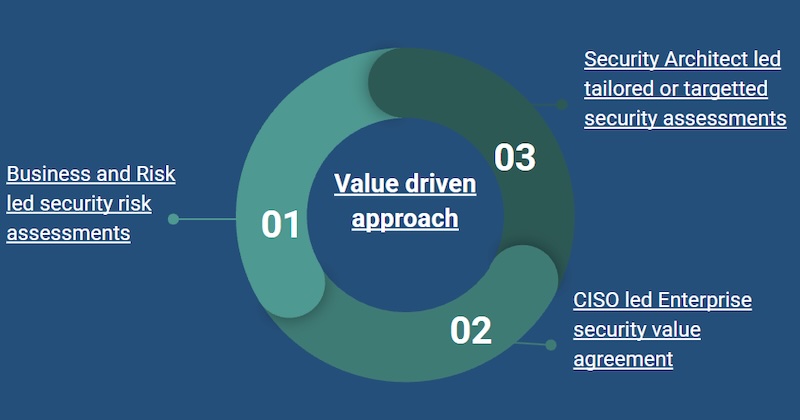
I like to describe it as a “heart over mind” approach. It’s not about being less structured; it’s about being intentionally focused on outcomes. In practice, my mindset rests on three simple tenets:
- Business and Risk-Led Assessments: I start with what the business cares about, identifying the risks that truly matter to it — the ones that could impact operations, trust or reputation — and I design controls that directly address those.
- CISO-Led Enterprise Alignment: Security architecture can’t live in isolation; I need executive sponsorship and clarity from the top. When I and leadership agree on the organization’s security priorities, architecture becomes an enabler, not a bottleneck.
- Architect-Led Pragmatism: This is where art meets science. As a security architect, my role is to translate those priorities into practical solutions — ones that respect the enterprise’s risk appetite, budget and pace of change. That often means tailoring frameworks, not applying them blindly.
It’s my experience that, when we design with these principles, we move from being gatekeepers to being trusted advisors.
Security Practitioner First, Architect Second
The emergence of AI is rapidly automating traditional architectural tasks — from generating diagrams to suggesting controls and mapping them to compliance objectives. But the real value of a security architect isn’t in producing artifacts. It’s in thinking critically, connecting dots across domains and guiding teams toward secure outcomes.
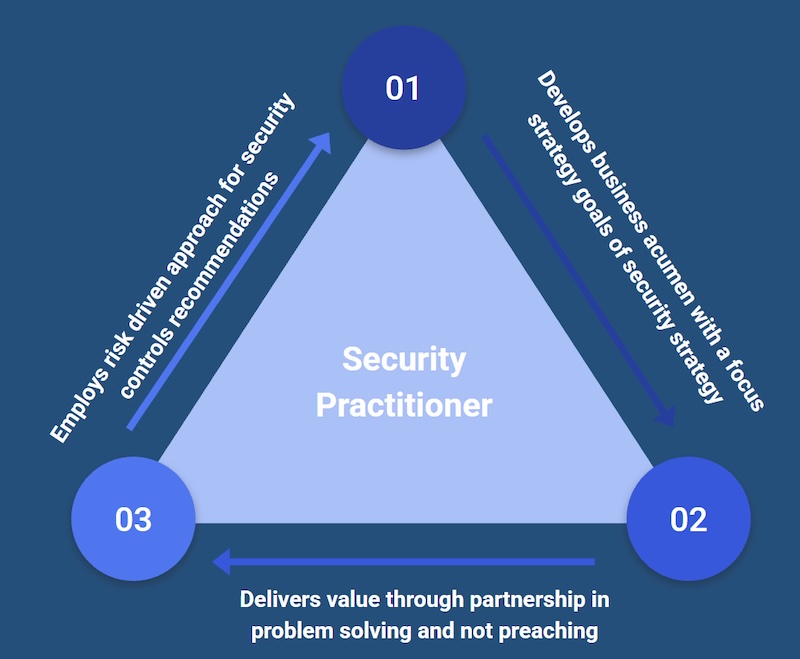
That’s why the future belongs to those security practitioners who are hands-on, curious and unafraid to adapt. Practitioners don’t just design for security; they live it. We walk with the business, partner with risk and technology teams. We continuously refine how security supports innovation.
To me, being a practitioner means:
- Developing strong business acumen
- Solving problems collaboratively rather than policing compliance
- Keeping a learning mindset as technology and threats evolve
Security architecture done this way doesn’t slow things down, it enables agility and resilience. It’s time to let purpose lead the process.
Leading with Purpose
Security architecture is not dying; it’s evolving. Our success depends on how well we can balance structure with agility, and principles with practicality. When we architects focus on value, align with business priorities, and apply frameworks intelligently, security becomes more than a checkbox, it becomes a differentiator. Today’s organizations need security architects who can translate complexity into clarity and help them stay resilient in turbulent times.
Mohammed Ibrahim Aleem, CISSP, has 23 years of experience in IT, telecoms, financial services and higher education. He has held security architect roles, with responsibility for developing security frameworks, strategies and architectures enabling secure and resilient business outcomes.
.png?h=420&iar=0&w=420)
.png?h=420&iar=0&w=420)