In the second of three articles looking at the cybersecurity contribution of the U.S. over the last 250 years, we look more broadly at some of the globally significant hardware, software, services and legislation that the U.S. has been responsible for.
 The U.S. has played a defining role in the development of cybersecurity, information assurance and secure communications. Although the term “cybersecurity” is a relatively recent one, the foundations of protecting information, securing communications and safeguarding critical systems can be traced back to the earliest years of the nation. From cryptography used during the American War of Independence to modern artificial intelligence (AI)-based security technologies, the U.S. has consistently been at the forefront of innovation in protecting information and digital infrastructure.
Over the past 250 years, American government agencies, public institutions, universities, private companies and individual innovators have contributed technologies, standards, policies and educational frameworks that have shaped cybersecurity not only within the U.S. but around the world – building on the legacy of the nation’s early cybersecurity activities. These contributions extend far beyond hardware and software. They include cryptographic research, internet security protocols, cybersecurity legislation, professional certifications, workforce development initiatives and the creation of many of the standards that underpin modern digital security today.
Early Foundations: Secure Communications and Cryptography
As we covered in the first part of this series, American leaders as far back as 250 years ago recognized the importance of protecting sensitive information. During the American War of Independence, figures such as George Washington relied heavily on coded messages, ciphers and invisible ink to conceal military plans from British forces. The activities of the Culper Spy Ring demonstrated the strategic value of secure communications and intelligence gathering, establishing principles that would later become central to cybersecurity.
Throughout the 19th century, the U.S. continued to develop secure communication techniques. The widespread use of the telegraph created new challenges related to message interception and confidentiality. Governments, military organizations and businesses increasingly relied on encryption methods to protect sensitive communications, laying the groundwork for the cryptographic innovations that would emerge in the 20th and 21st centuries.
American Leadership in Computing Security
The development of modern cybersecurity is inseparable from the evolution of computing itself, and the U.S. was a driving force behind many of the technologies that made secure computing possible.
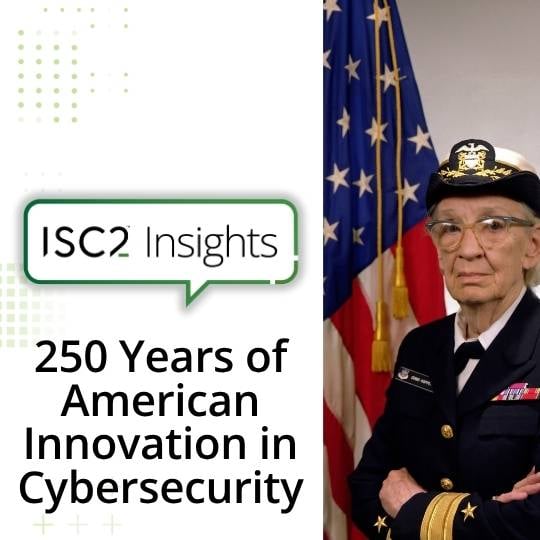
Among the most influential figures was Grace Hopper, the computer scientist and U.S. Navy rear admiral. Hopper’s pioneering work on programming languages and compiler technology helped make computing more accessible and scalable. While her work was not directly cybersecurity-focused, the software engineering principles she helped establish became essential for developing secure and reliable software systems. She is also frequently credited with popularizing the term “bug” in relation to computer errors, reinforcing the importance of identifying and correcting flaws in computer systems.
Other American innovators, including Claude Shannon, the mathematician and information theorist, made foundational contributions to information security. Shannon’s work in information theory and cryptography during and after the Second World War established mathematical principles that continue to underpin modern encryption systems. His landmark research effectively created the scientific framework upon which much of contemporary cryptography is built.
The Birth of Modern Cryptography
Few areas demonstrate American influence on cybersecurity more clearly than cryptography.
The U.S. government, particularly the National Security Agency (NSA), invested heavily in cryptographic research throughout the Cold War and in the years that have followed. While much of its direct work remains classified, it has nonetheless helped drive advances in secure communications, cryptanalysis and information assurance.
The private sector also played a critical role. In the 1970s, researchers working at IBM developed the Data Encryption Standard (DES), which became one of the world’s first widely adopted encryption standards. Although DES was eventually replaced by stronger algorithms, its adoption marked a major milestone in the commercialization of cryptography.
American researchers also contributed to the development and adoption of public-key cryptography. While the concept emerged through the work of several international researchers, U.S.-based academics and technology companies played a central role in bringing public-key infrastructure (PKI), digital certificates and secure internet communications into widespread use.
Later, the U.S. government helped establish the Advanced Encryption Standard (AES) through the National Institute of Standards and Technology (NIST). AES remains one of the most widely used encryption standards in the world and protects everything from government communications to online banking transactions.
Building a Secure Internet
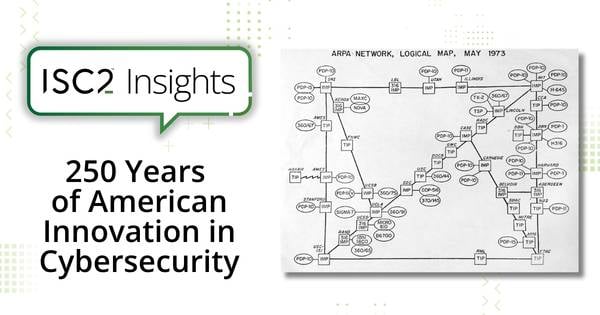
The modern internet owes much of its existence to U.S. innovation. The original ARPANET project, funded by the Defense Advanced Research Projects Agency (DARPA), laid the foundation for today’s interconnected digital world. While the creator of the World Wide Web, Tim Berners-Lee is arguable better known for his to the modern internet, it is the underlying contribution of ARPANET, creating the foundation that made the work of Berners-Lee and other internet application developers possible.
As internet adoption accelerated, U.S. researchers and organizations developed many of the security technologies required to protect online communications. These innovations included Secure Sockets Layer (SSL), later succeeded by Transport Layer Security (TLS), which enable encrypted communications across the web. Today, these technologies secure billions of online transactions and interactions every day.
U.S. companies also pioneered the development of commercial firewalls, intrusion detection systems, antivirus software and endpoint protection technologies. Organizations such as Cisco Systems, Palo Alto Networks, McAfee and Digital Equipment Corporation are just a few of the U.S.-based organizations that have helped shape the global cybersecurity industry through innovations that protect organizations against increasingly sophisticated cyber threats. Mergers, acquisitions and failures mean that while some of the companies responsible for the genesis of these technologies no longer exist as standalone businesses, their global impact remains visible today.
Standards, Frameworks, and Best Practices
One of the most significant contributions made by the U.S. to global cybersecurity has been the development of standards and best practices.
NIST has become one of the world’s most respected authorities on cybersecurity guidance. Its publications, including the Cybersecurity Framework (CSF), Special Publication 800 series and risk management guidance, are used by governments, critical infrastructure operators and private organizations across the globe.
The NIST Cybersecurity Framework, first released in 2014 and subsequently updated, has become a de facto international standard for managing cybersecurity risk. Organizations of all sizes use the framework to identify, protect, detect, respond to and recover from cyber incidents.
Similarly, U.S. agencies such as the Cybersecurity and Infrastructure Security Agency (CISA), provide guidance, threat intelligence and best practices that benefit not only U.S. organizations but also international cybersecurity communities.
Cybersecurity Education and Workforce Development
The influence of U.S. cybersecurity development and innovation extends beyond technology into education and professional development. The U.S. has played a leading role in transforming cybersecurity from a technical specialization into a recognized profession with established standards, qualifications and career pathways.
Universities across the U.S. were among the first to offer dedicated cybersecurity degree programs, research centers and specialist training initiatives. Institutions designated as National Centers of Academic Excellence in Cyber Defense have helped produce generations of cybersecurity professionals and researchers.
Among the most influential contributions to professional development and cybersecurity education was the creation of the Certified Information Systems Security Professional (CISSP) certification by ISC2 in 1994.
The CISSP certification helped establish a common body of knowledge for cybersecurity practitioners and provided employers with a globally recognized benchmark for professional competence. Covering topics including security operations, risk management, software security, asset security, network security and governance. The CISSP is among the most respected cybersecurity certifications in the world. CISSP holders represent a significant proportion of the cybersecurity leadership in major organizations. Steve Katz, the American cybersecurity professional celebrated as the first person to hold the job title of CISO, was a CISSP.
However, its influence extends beyond certification holders. The CISSP helped define cybersecurity as a multidisciplinary profession requiring technical expertise, business understanding, risk management skills and ethical responsibility. Many subsequent certifications and training programs have been influenced by the framework established by ISC2.
Government Policy and Regulation
The U.S. has also influenced cybersecurity through legislation, policy development and public-private partnerships.
Federal initiatives have encouraged information sharing, critical infrastructure protection, cyber incident reporting and national cybersecurity strategy development. Regulations affecting sectors such as finance, healthcare, defense and energy have helped establish security requirements that are frequently adopted or adapted by other countries.
The U.S. government’s emphasis on collaboration between public agencies and private industry has contributed to the development of a cybersecurity ecosystem that combines innovation, threat intelligence sharing, and operational resilience.
Building on 250 Years of Progress
Today, many of the most significant cybersecurity innovations continue to emerge from the U.S.
Organizations across the country are leading the development of AI-driven threat detection, behavioral analytics, automated incident response, cloud security platforms and zero-trust architectures.
As cyber threats continue to evolve, the U.S. remains one of the most important centers of cybersecurity research, education, innovation and leadership. It has helped establish the standards, educational pathways, and professional frameworks that support cybersecurity practitioners worldwide. Its contributions over the past two and a half centuries have not only protected U.S. interests but have also helped build the foundations of the secure digital world on which modern society depends.