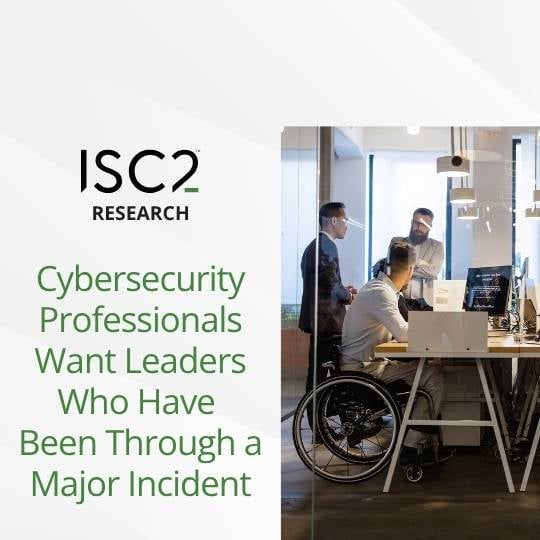
In a survey of active cybersecurity professionals, respondents noted their desire for leaders with both technical and executive leadership experience, alongside their confidence being enhanced when leaders have already faced major cybersecurity incidents.
With the cybersecurity world undergoing one of its most intense periods of change and transformation ever, the role of cybersecurity leaders is increasingly falling under the spotlight. Responsible for guiding their teams — as well as their wider organizations — through this period of unprecedented change, cybersecurity leaders are at the forefront of technical, people-centric, skills-related and financial decision-making and justification. Carrying so much responsibility makes issues of trust and confidence in cybersecurity leaders important for ensuring team buy-in, as well as effectiveness.
ISC2 asked 796 people working in cybersecurity roles in April 2026 for their views about their cybersecurity leadership; in particular, what traits help foster a sense of trust, confidence and credibility in leaders among their team members.
The findings provide valuable insight for cybersecurity leaders, from the very professionals they work with. The findings tell cybersecurity leaders that the most trusted security leaders are those that create confidence through transparency, consistency and their ability to align security priorities with business outcomes. For leaders who now find themselves in an environment where cybersecurity risk impacts every part of the organization, it is the ones who communicate clearly, empower their teams and demonstrate calm, decisive leadership under pressure that are far more likely to earn lasting credibility with their teams and across the enterprise.
A Matter of Confidence

Respondents expressed confidence in their current cybersecurity upper leadership (CISO, CSO, CIO, CTO, etc.), with 34% very confident and 15% extremely confident, making for a combined positive measure of confidence of 49%. In comparison, 31% expressed moderate confidence, with 15% being only slightly confident and 6% having no confidence in their cybersecurity leaders. While nearly half of respondents expressed higher levels of confidence, the fact that more than half have only moderate-to-no confidence is something that cybersecurity leaders should be concerned about.
“A leader should be a master of their trade and lead their team well, with a productive attitude at the same time. Keeping the happiness quotient of the team is a priority,” noted one respondent.
As for why, industry reports such as the 2026 NASCIO-Deloitte Cybersecurity Study pointed to rising adoption of AI and agentic AI, along with the speed at which attacks are occurring. Both create friction and challenges for teams, with leaders being looked to for support, direction and strategy. The same report noted that CISOs are less confident about their ability to safeguard data assets than they were just four years ago, with that lack of confidence potentially cascading down to their teams.
Key Leadership Traits
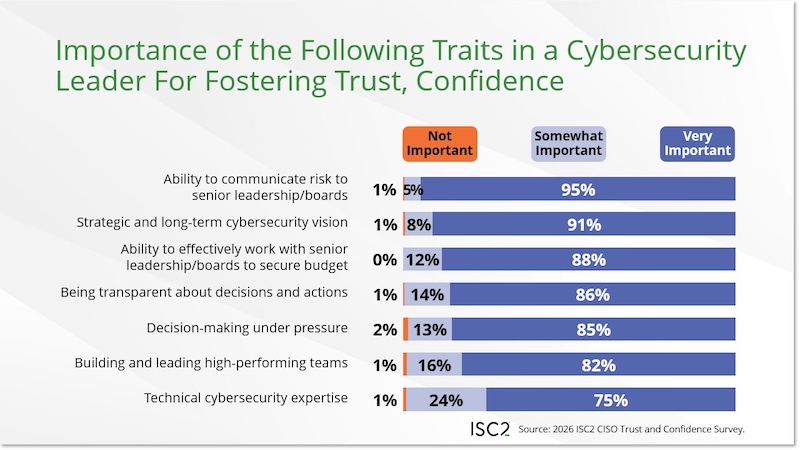
Solidifying team confidence in leaders requires those in leadership positions to have several key traits. It was the ability to communicate risk to senior leadership and boards that ranked highest, with 95% of respondents marking this trait as very important. It was followed by having a strategic and long-term cybersecurity vision (91%), the ability to effectively work with senior leadership and boards to secure budget (88%) and being transparent about decisions and actions (86%). Decision-making under pressure (85%), building and leading high-performing teams (82%) and technical cybersecurity expertise (75%) made up the rest of the very important rankings.
“The most important trait in a cybersecurity leader is the ability to align security strategy with business goals while earning trust through clear judgment, communication and accountability,” noted one respondent, while another pointed to the importance of ethics in leadership, stating: “A CISO must demonstrate the highest ethical standards, lead by example for compliance with policies and procedures, and ensure their direct leadership is held accountable to the same”.
While most respondents considered all seven traits important in a cybersecurity leader, it is notable that technical expertise trailed behind six nontechnical traits, highlighting the importance that cybersecurity teams are placing on strategy, direction and communication-related traits and the ability of their leaders to act as the interface between what they are doing and the rest of the organization’s decision-makers.
Trust in Previous Incident Experience
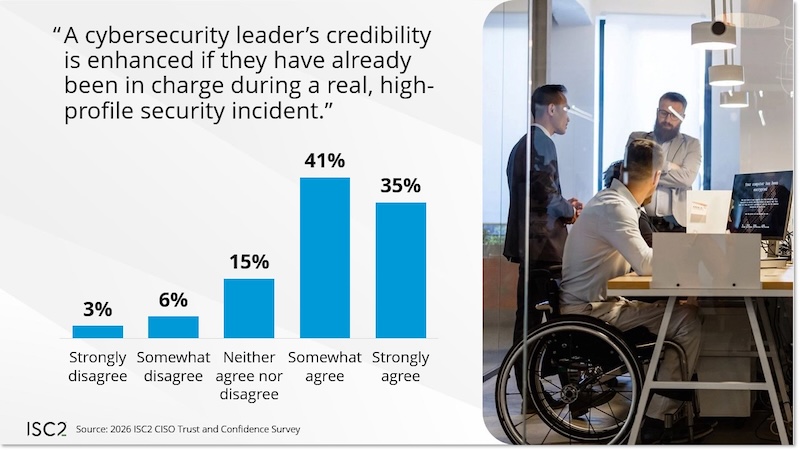
We’ve seen many examples in the last few years of cybersecurity leaders paying the price for a data breach or an attack disrupting their organization. Data from antivirus vendor Sophos suggested that CISOs have a one-in-four chance of losing their jobs after an attack. On that basis, we asked respondents whether the credibility of a cybersecurity leader would be enhanced if that leader had previously been in charge during a high-profile cybersecurity incident, regardless of blame or outcome. It was notable that this experience is viewed as a significant positive, with 41% somewhat agreeing and 35% strongly agreeing that previous leadership experience during a cybersecurity incident bolsters credibility. Just 9% disagreed with the premise.
While some organizations have opted to part ways with cybersecurity leaders after an incident, there is cause to examine this decision, as teams clearly placed significant value in the knowledge and experience those people can bring. Arguably, it is better to learn from those mistakes than to have someone else repeat them. Multiple respondents also noted the critical importance of being calm under pressure, a trait that is far more likely to come from a leader who has previously faced a major incident.
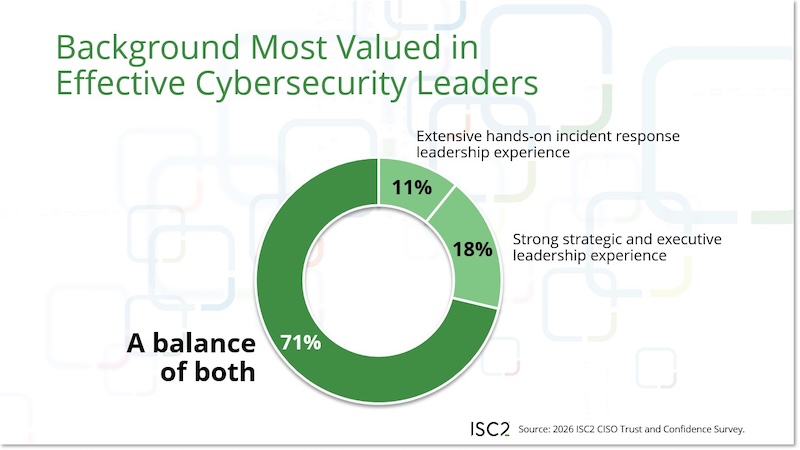
Furthermore, respondents were asked whether technical hands-on experience or strategic and executive leadership experience were more valuable in a cybersecurity leader. As expected, most respondents (71%) wanted a balance of both. However, of those who favored one over the other, it was notable that nontechnical experience (18%) trumped hands-on technical incident experience (11%) as the preferred background for a cybersecurity leader.
Several respondents commented that strong leadership traits such as the ability to drive teams through high-stress situations, business acumen and the ability to articulate complex ideas and technologies in simple business-oriented terms were essential to garner trust and confidence.
Being More Trusted as Leaders
Effective cybersecurity leadership is no longer defined solely by technical expertise or the ability to respond to threats.
As one respondent put it, the ideal cybersecurity leader needs:
For CISOs, CIOs, CTOs, and other security leaders looking to strengthen trust and confidence within their organizations, several practices consistently stood out:
- Communicate With Clarity and Honesty — Be transparent about risks, priorities and challenges. Teams and executives are more likely to trust leaders who provide realistic assessments rather than overly optimistic narratives.
- Lead With Consistency During Uncertainty — In high-pressure incidents or periods of change, calm and consistent decision-making reinforces confidence and demonstrates leadership maturity.
- Build Relationships Beyond the Security Function — Strong cybersecurity leaders invest time in understanding business objectives and collaborating across departments, helping position security as an enabler rather than a blocker.
- Empower and Develop Teams — Trust grows when leaders create environments where teams feel supported, heard and accountable. Investing in professional growth and recognizing contributions strengthens both morale and organizational resilience.
Ultimately, the most successful cybersecurity leaders are not simply those who protect systems and data, but those who create trust in their leadership when it matters most.