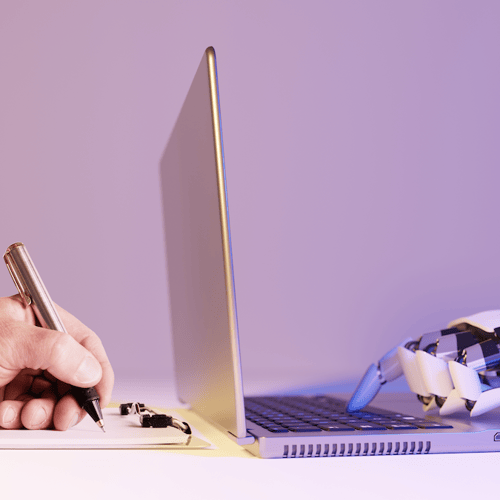
The integration of artificial intelligence (AI) into cybersecurity operations has happened and it’s changing how we defend, respond and build resilience. As Shaikh Muhammad Adeel, CISSP explains, this evolution brings enormous opportunity; but only if we invest in upskilling and reshape how we think about human roles in security operations.
 Disclaimer: The views and opinions expressed in this article belong solely to the author and do not necessarily reflect those of ISC2.
As the latest ISC2 Cybersecurity Workforce Study notes, we professionals are optimistic about AI, with 68% of us already using or planning to use AI tools in our organizations. I’ve witnessed firsthand the shift from rule-based detection to AI-enhanced decision-making.
AI Is Already Changing Roles at the Core of Cyber Defense
While its impact is widespread, AI is particularly reshaping the work of security operations center (SOC) analysts and incident responders, automating many traditionally manual tasks like log correlation, alert triage and threat scoring. But, instead of replacing human workers, AI augmenting them. Analysts are no longer sifting through thousands of benign alerts; intelligent systems now flag anomalous behavior based on behavioral baselines and prioritize what matters. The responder’s job becomes less about initial detection and more about interpreting complex signals, confirming intent and advising stakeholders on impact; work that requires judgment, context and communication skills.
This evolution means job descriptions must be rewritten. For example, SOC analysts must now understand not just networking and security protocols, but also how AI models process and correlate threat data. The entry-level SOC role is now more analytical, requiring familiarity with data science basics and an understanding of how algorithmic decision-making works.
Furthermore, I’m seeing collaboration with AI engineers become more common. Cybersecurity teams are participating in feedback loops to improve AI detection, test false positives and understand system limitations. These hybrid capabilities will define the next generation of cybersecurity professionals.
AI As a Defender’s Tool and an Attacker’s Weapon
While defenders gain speed and scale through AI, attackers are innovating just as fast. According to the ISC2 study, one in three cybersecurity professionals has already encountered AI-powered attacks, including deepfake-enabled phishing and adaptive malware. The tools once reserved for nation-states are now available to cybercriminals through open-source large language models and adversarial automation kits.
Beyond deepfakes and phishing, I see AI accelerating reconnaissance and vulnerability exploitation. Tools powered by generative AI can write custom payloads, scan for zero-days and launch polymorphic malware that changes with every iteration. This makes traditional signature-based detection obsolete.
Red teams and threat hunters are already integrating adversarial AI into simulation exercises. Blue teams must catch up by using similar technologies for deception, honeypots, and predictive threat modeling.
But it seems obvious to me that we can't simply attempt to match fire with fire; we must rethink how teams operate. This rethink must include understanding how AI-generated behaviors differ from traditional attack patterns and the development of adaptive, proactive defense strategies that combine machine learning with human expertise.
Upskilling: The Key to Cyber Resilience in the Age Of AI
The ISC2 study highlights a major shift: with hiring slowed due to budget and talent limitations, “developing existing talent” has become the top strategy to address skills needs. I agree that upskilling is now the cornerstone of resilience.
However, I also think that this means training SOC teams not just in new tools, but in new mindsets:
- From rule-makers to model overseers
- From alert responders to pattern interpreters
- From solo operators to collaborators with intelligent systems
Our upskilling programs must also address soft skills: ethical reasoning, risk communication and decision-making under uncertainty. As AI outputs guide security operations, our ability to question and interpret model results becomes a core professional skill.
Leadership necessarily has a pivotal role to play: CISOs and other senior managers must champion learning as a strategic function, not as a side initiative. Budget must be allocated not just for tools, but for training paths that help teams understand those tools. Organizations that commit to ongoing professional development will gain both agility and loyalty from their teams.
Striking The Right Balance: Human Judgment and Machine Speed
From this point on, the most powerful defense strategy is not full automation; it’s symbiotic collaboration between people and machines. Yes, AI brings consistency, speed and scale. But humans bring context, ethics and intuition. The sort of resilient cybersecurity team we should be aiming to build today will lean into both.
This requires a culture shift as much as tool adoption. Consider the case of phishing detection: AI can flag emails with unusual patterns or suspicious links, but only a human analyst can assess the business context. Was this a legitimate urgent request from a vendor, or a sophisticated spoof?
Likewise, AI might alert on an anomalous data transfer, but it takes human insight to determine whether it's a threat, a misconfiguration, or a false alarm triggered by a legitimate change window.
Our playbooks must therefore evolve to include AI checkpoints. Incident response workflows must designate when and how AI recommendations are reviewed. This not only protects decision quality, but builds staff trust in the systems they rely on.
A Call to Action for Security Leaders and Practitioners
ISC2’s Cybersecurity Workforce Study makes it clear: cybersecurity success now depends less on headcount alone and more on adaptability. AI will continue transforming how we defend digital systems, but without the right skills, structure and support, even the best tools will underperform.
So, my checklist of actions to do now includes:
- Auditing team skills and identifying gaps in ‘AI-readiness’
- Investing in targeted upskilling for existing talent
- Redesigning incident response playbooks with human-AI collaboration in mind
- Building a culture of continuous learning, curiosity, and ethical awareness
Cybersecurity leaders must also invest in change management. AI adoption can generate anxiety around job security or capability gaps; leaders need to create psychological safety by emphasizing that automation is meant to enhance, not eliminate, the human role. Clear communication, inclusive design sessions and transparent performance evaluations will help our staff embrace these changes.
Finally, I suggest that partnerships with academia and training providers will help close the knowledge gap. Offering our colleagues the time, tools and incentives to deepen their knowledge is a long-term investment in both security and retention.
Shaikh Muhammad Adeel, CISSP, has 16 years of experience in government, finance, healthcare, education and critical infrastructure. He has held strategic, technical and executive roles, with responsibility for building security operations, driving AI adoption and leading AI governance and cyber risk programs.