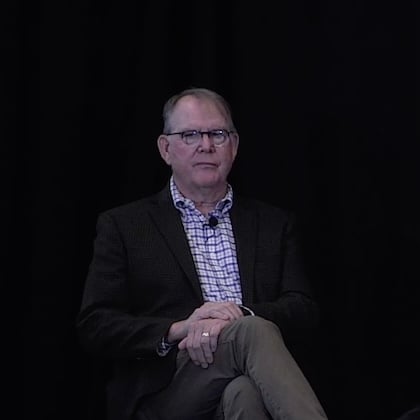
As chair of ISC2’s newly created Academic Advisory Council, Brian Callahan, Ph.D., ISSMP, CISSP, CCSP, CGRC, SSCP, CC wants to help prepare today’s cybersecurity students to become tomorrow’s leaders.
“If we are all working together, we will produce future generations that meet industry needs faster with less on-the-job training,” he says. So whatever the council does today must be in service of tomorrow’s needs.
Callahan is Specialist Professor at the Department of Computer Science and Software Engineering (CSSE) at Monmouth University, and director of the school’s Cybersecurity Research Center (CRC). As council chair, he leads its mission to align classroom learning with workforce expectations and build a more resilient cybersecurity talent pipeline.
Chairing the council, Callahan says, is the opportunity he has worked for at Monmouth University and, previously, at Rensselaer Polytechnic Institute (RPI). “ISC2 has been crucial to starting my academic cybersecurity program. I had all my students earn their CC certification as part of class.”
Aligning Education with Industry Needs
With hundreds of cybersecurity degree programs now in place at universities and colleges, Callahan believes the council can help make a difference.
“We genuinely have time to prepare students at the level of theory and train them directly on the tools that industry produces and uses,” Callahan says. “Several companies have already begun to do exactly that. We have time to prepare students in exactly the way industry needs to begin making an impact on day one.”
Collaboration between industry and academia can help schools adapt to rapid change brought on by AI, he says. Curricula can be updated accordingly and anticipate future requirements.
The Skills Students Need
Preparing students for cybersecurity roles requires three primary elements, according to Callahan:
- Demonstrate knowledge of IT and networking in addition to cybersecurity
- Develop practical, hands-on knowledge
- Apply critical thinking to questions we do not yet know how to ask
“Understanding the theory— the core concepts not just of cybersecurity but of networking, IT, computer science, and more—is what allows students to not get lost when they start working. These skills will remain relevant as AI and other emerging technologies such as quantum computing continue to reshape the industry landscape.”
Listening to Tomorrow’s Leaders
Callahan believes students have a lot to contribute to cybersecurity. While at Rensselaer, he formed the ISC2 Capital District NY chapter. “Students were always at the heart of the chapter. If you let them, students will stand up and lead. Our students grew to see themselves as part of ISC2, and were excited to be part of ISC2.”
Callahan advises educators to listen to students. “They can be your eyes and ears into industry. If a student tells you they went on an internship interview and their interviewer told them they will be working with a certain technology or vendor product, figure out how to bring that into the classroom.”
“After all,” he says, “today’s students are tomorrow’s leaders, and universities play a serious role in the early stages of bringing up the next generation of leaders.”