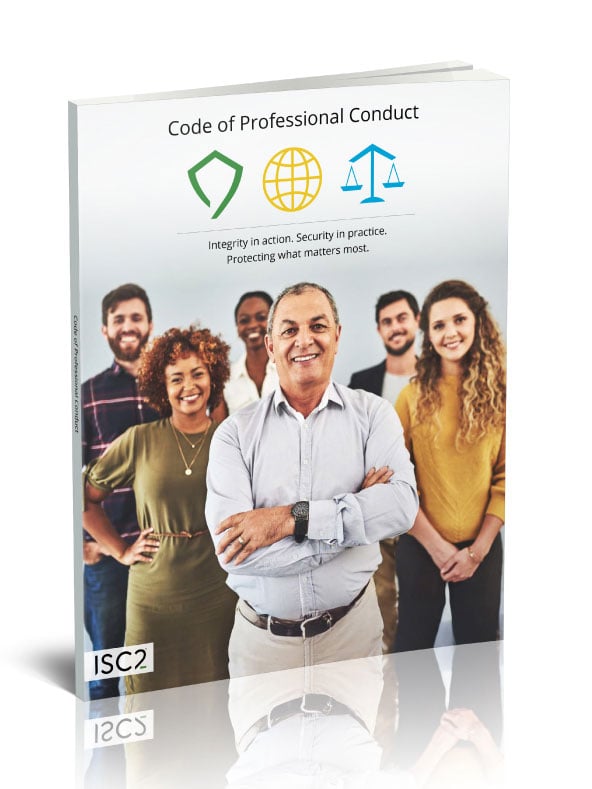
Code of Professional Conduct
Integrity in action, security in practice. Protecting what matters most!
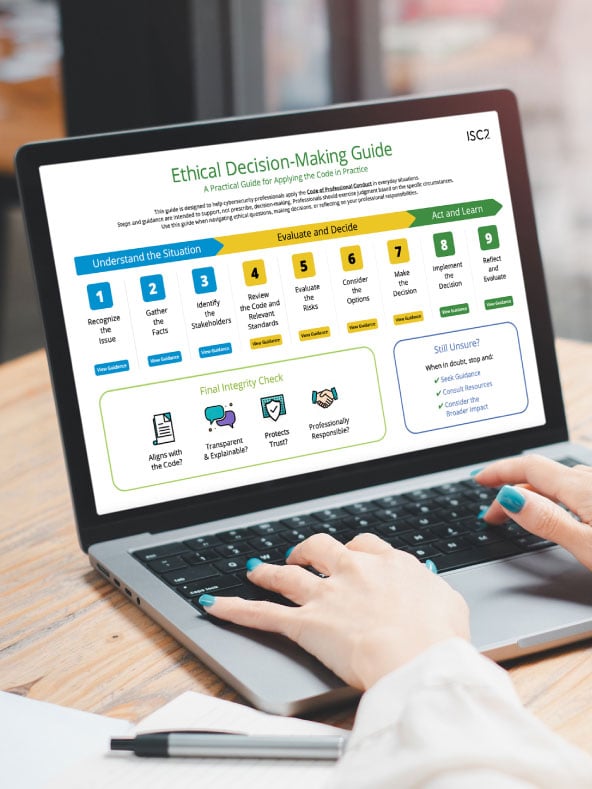
In today’s fast-paced and high-stakes cybersecurity landscape, ethical decision-making is more critical than ever. To support professionals in navigating complex challenges with integrity, ISC2 has developed a comprehensive Code of Professional Conduct for the global cybersecurity community..
Loading component...
Built on a Strong Ethical Foundation
This new Code builds upon the existing ISC2 Code of Ethics, which all ISC2-certified members and Associates are required to follow. It expands the scope to address a broader range of professional conduct, ethical considerations, and their practical applications across the cybersecurity profession.
Guiding Principles for Cybersecurity Professionals
The Code of Professional Conduct outlines key principles and ethical standards designed to help cybersecurity practitioners:
- Act justly, fairly and responsibly
- Make ethically sound decisions in complex situations
- Foster trust with clients, colleagues, and stakeholders
- Uphold the reputation and integrity of the cybersecurity profession
Whether you're managing risk, responding to incidents, or designing secure systems, this Code serves as a vital resource for maintaining professional accountability and ethical clarity.
Globally Reviewed and Approved
Developed in collaboration with our Code Task Force comprised of cybersecurity volunteers worldwide, the Code has been thoroughly reviewed by the ISC2 Ethics Committee and officially approved by the ISC2 Board of Directors.
Cybersecurity Ethics Case Studies
Explore real-world scenarios that bring the Code of Professional Conduct to life. These fictional case studies help cybersecurity professionals navigate complex ethical challenges, exercise professional judgment and consider how the Code can guide responsible decision-making in practice.
How To Use These Case Studies
Designed for individual reflection, team discussion, training or facilitated conversation, these case studies explore situations where the right path forward may not always be clear. Each includes key considerations, a practitioner's perspective, connections to the Code of Professional Conduct and reflection prompts to support discussion and practical decision-making.
The scenarios are not intended to lead readers to one correct answer. Instead, they encourage cybersecurity professionals to consider how experience, responsibilities, organizational context and the Code can inform professional judgment.