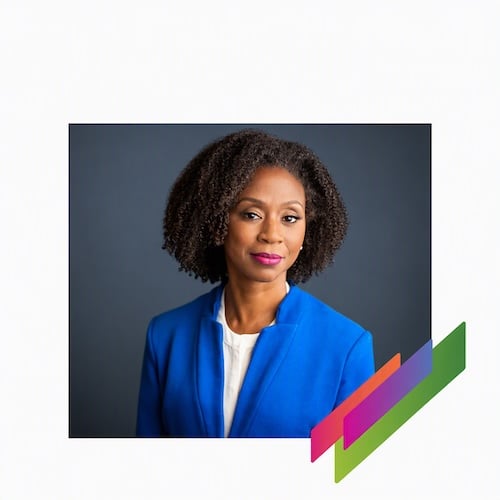
AI may be causing disruption for cybersecurity professionals, but it is just a dress rehearsal for what will come in the wake of quantum computing, former acting U.S. National Cyber Director Kemba Walden told attendees at ISC2 Security Congress.
This all means that cybersecurity knowledge needs to be diffused more broadly through society, along with more non-traditional routes into the profession being opened up.
But central to all of this is the need for individuals to identify their – and others’ – superpowers, Walden said, which are essentially human qualities like critical thinking and curiosity.
A Non-Traditional Path
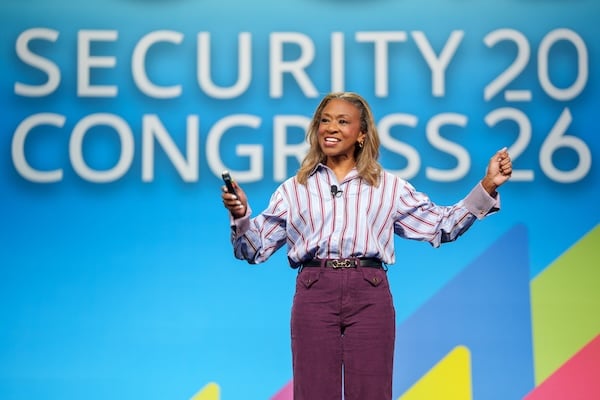 Walden noted her own untraditional path into cybersecurity. This included a childhood split between San Francisco and the Bahamas carrying out conflict resolution work in areas like post-Soviet Georgia.
This taught her to look for common ground, she said, “The humanity in the middle of it all. That's how I build my teams. That's how I manage down. That's how I manage up. That's how I relate across communities.” The mission, she said, was “How do you develop security so that people can thrive? That was my mission in international development”.
From there she moved into policy work and ultimately became a national security lawyer, specializing in the Committee on Foreign Investment in the U.S. and national security law.
“Why? Because most of our digital infrastructure serves everything that we do. It serves the medical clinic that my father had. It serves the flower shop, my favorite flower shop from down the street. It serves the schools in which I sit on the board. It serves everything that our society rides on.”
Route to the White House
This in turn brought her, via Microsoft, to the Biden White House in the Office of the National Security Director, where she was Acting National Cyber Director from February 2023 to November 2023.
Then, “The weirdest thing happened. I ended up in a venture capital firm” as president of the Paladin Global Institute, she explained. “And the theory is, if we're going to invest in startups that focus on cybersecurity, AI security, biotech, whatever it is, we need to make sure that our return on investment is consistent with U.S. and allied policy”.
Throughout all those roles, she said, team diversity was key, with individual members bringing different skills and perspectives in pursuit of a mission.
“The institute is an alliance-building platform to do just that, taking all of those years and all of those experiences, that AI cannot replicate”.
AI Can’t Replace Human Characteristics
Ultimately, Walden said, while AI can process data much faster than a human, “It cannot replicate what the core of my humanity is and the value I bring there into the institute and everything that I do. It is a mission that I have developed over time that AI cannot replicate.” It is humanity, she believes, that stands between “the promise of AI…and the perils of AI”.
At the end of her talk, Walden said “We as humans, our humanity, we have to focus on decision making skills, critical thinking skills, how to develop mission, how to see beyond just the context, how to look deeper, and use the incredible processing power of AI, the incredible math behind AI, as a tool to that end.” Asked how individuals can develop these skills, she said, “So I ask questions…There's going to be common ground somewhere. It's exercising that every day that helps you sharpen that skill.”
Or, she added, “read a book…Ask the hard questions and be creative about solutions. Find people who think differently than you do.” She warned the audience “you can’t just rely on the tool.” Walden continued, the world can’t just rely on a core of elite cybersecurity professionals to keep the country safe.
Walden was asked whether, in the light of the AI revolution, she’d have done anything different when developing the National Cyber Workforce and Education Strategy.
She said the Biden administration plan focused on three concentric circles: a core of cybersecurity professionals; the lawyers, accountants, CEOs and boards that support that core; and then the communities, the schools, etc. that make up the rest of the society and still had a role in protecting digital infrastructure.
Looking back, she said, “we were not detailed enough” on how to bring more quantitative skilling to the education curriculum or how to bring security into the computer science curriculum. “We didn't anticipate AI democratizing vibe coding,” she added, which has the potential to introduce new vulnerabilities.
“So, what I would do differently is take that center circle of the hardcore cyber tech folks and that center, that second circle of the few, the many and I would have broadened those two to bring that core to the masses”.
Looking ahead, she said, it was the strategic thinking that is key as the world prepares for the impact of AI on infrastructure and communities – and the impact of quantum computing before too long.
“You don't necessarily have to teach the skill anymore. AI is going to do that. Teach the mission. Teach strategic thinking. Teach critical thinking. Build your team,” she said. “The skill will come with the AI, so we have to think a little differently as we manage, as we build teams, as we communicate with each other, and relate across communities”.
Walden warned, “If you think AI is changing your life now, it is, lean into it. This is a dress rehearsal because quantum is not far behind. Quantum science is even more trippy than the funky math of AI”.
Learn more about ISC2 Security Congress 2026 Sessions
Virtual attendees to Congress can see an on-demand replay of this keynote as part of their existing access. On-demand access packages for Congress sessions will be available after the event.