 Cloud security certification is one of the most effective ways to validate the skills required to secure today’s multicloud environments. As organizations accelerate cloud adoption, they’re looking for professionals who can defend cloud infrastructure, applications and data — while also managing governance, compliance and risk at scale.
Many cloud security professionals don’t rely on a single certification track. Instead, they build a layered roadmap that combines cloud-provider knowledge (AWS, Microsoft Azure, Google Cloud) with vendor-neutral security expertise.
That’s where vendor-neutral ISC2 certifications become career accelerators — because they teach you not just how to use tools, but why security matters in any security environment. ISC2 certifications — including Certified Information Systems Professional (CISSP), cybersecurity’s gold standard in leadership — demonstrate knowledge and skills around security principles that apply across all environments.
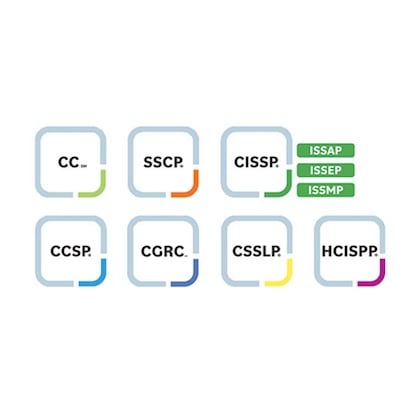
A strong cloud security certification roadmap starts with baseline cybersecurity fundamentals, progresses into operational skills, and then moves into cloud architecture, governance and leadership.
Certified Cloud Security Professionals (CCSP) from ISC2 is a leading cloud security certification because it validates multicloud readiness.
Explore a broad overview of the discipline: Cloud Security Overview.
Building a Cloud Security Career Path
Today’s cloud security career paths are rarely linear. Roles often overlap with DevOps, network security, application security, identity governance and compliance. That’s why certification planning must be strategic.
Many professionals progress through three broad phases:
- Foundational cybersecurity knowledge
- Operational security and implementation
- Architecture, governance and leadership
A well-structured cloud security training and certification strategy should support all three.
The Cloud Baseline (CC)
If you’re early in your career — or transitioning into cybersecurity — the best place to start is building a strong cybersecurity foundation before specializing in cloud systems.
Certified in Cybersecurity (CC) certification from ISC2 is designed to establish foundational cyber knowledge and help you develop a security-first mindset. That perspective matters in cloud environments because misconfigurations, weak identity policies and poor access controls are some of the most common causes of cloud breaches.
CC is a practical first step in a cloud security certification roadmap, especially for:
- Help desk or IT support professionals moving toward security
- Entry-level analysts
- Junior cloud engineers
- Professionals pivoting into cybersecurity from other fields
Explore CC here: Certified in Cybersecurity.
Operational Security Professionals (SSCP)
Once you understand core cybersecurity principles, the next step is building operational competence.
That’s where the Systems Security Certified Practitioner (SSCP) certification from ISC2 fits into your roadmap. It bridges the gap between general cybersecurity awareness and hands-on security operations. For professionals working in cloud operations, SecOps, security engineering support or hybrid environments, SSCP strengthens your ability to enforce policies and manage real-world security workflows.
SSCP supports job functions such as:
- Cloud security operations analyst
- Systems administrator with cloud responsibilities
- Security technician
- SOC analyst supporting cloud environments
Explore SSCP here: Systems Security Certified Practitioner.
Cloud Security Certification and Strategy
As organizations mature their cloud adoption, they increasingly need security professionals who can secure cloud architectures — not just monitor them. That shift is where cloud security becomes a high-impact career.
Why CCSP Leads in Cloud Security
CCSP is widely recognized as a top credential for professionals responsible for cloud security. Unlike certifications that focus on one provider, CCSP validates your ability to secure cloud environments across any platform. It emphasizes governance, architecture, data security and compliance — areas that matter even when organizations change cloud vendors, adopt hybrid infrastructure or build multicloud environments.
Explore CCSP here: Certified Cloud Security Professional.
Mastering the Six Domains
CCSP is built around core domains that reflect real-world cloud security responsibilities. Mastering these areas makes you more credible across both technical and executive audiences.
The CCSP domains cover:
- Cloud Concepts, Architecture and Design
Shared responsibility, cloud service models, deployment models and secure design principles. - Cloud Data Security
Data classification, encryption strategies, lifecycle management, retention and secure deletion. - Cloud Platform and Infrastructure Security
Securing compute, storage, virtualization layers and network segmentation. - Cloud Application Security
Secure SDLC, DevSecOps, application architecture and API security. - Cloud Security Operations
Monitoring, incident response, vulnerability management, logging and operational resilience. - Legal, Risk and Compliance
Governance, audits, privacy regulations, third-party risk and compliance frameworks.
These domains align directly with what employers expect from cloud security professionals — especially those managing multicloud ecosystems and vendor relationships.
Mapping ISC2 to AWS, Azure and GCP
One reason many professionals struggle to choose a cloud security certification is confusion about what each credential demonstrates.
Here’s a simplified way to view the difference:
| Certification Type |
What It Demonstrates |
Best For |
|---|---|---|
|
AWS / Azure / GCP security certs |
You understand that platform’s tools and configurations |
Cloud engineers, platform specialists |
|
ISC2 CC / SSCP |
You understand security fundamentals and operational execution |
Entry and mid-level security roles |
|
ISC2 CCSP |
You can design and govern cloud security across environments |
Architects, consultants, senior engineers |
|
ISC2 CISSP |
You can lead security strategy at enterprise scale |
Security managers, directors, executives |
If you’re pursuing AWS Certified Security – Specialty, Azure AZ-500 or Google Professional Cloud Security Engineer, pairing those with CCSP creates a powerful multicloud profile.
Preparation for Cloud Security Certification
Many professionals underestimate the difference between studying for a test and preparing for security certification.
Cloud certifications often include tool-specific knowledge. ISC2 certifications require you to think like a security professional. They test decision-making, governance awareness and best practices — not just memorization.
A strong cloud security training and certification plan should include both study resources and practical experience.
Study Strategies for CCSP and CISSP
If you’re preparing for CCSP (and eventually CISSP), focus on structured learning, not random studying.
Effective preparation strategies include:
- Use an official study guide to build foundational understanding
- Reinforce learning with practice tests to identify weak areas
- Map your daily job experience to exam domains
- Study concepts through real scenarios (multicloud identity, encryption choices, shared responsibility)
- Spend extra time on legal, compliance and governance topics if you’re coming from a purely technical background
Because CCSP is experience-based, many candidates succeed faster when they approach it like a professional skills validation.
Explore ISC2 offers flexible training options here: 3 Ways to Train for CCSP.
Maintenance and Professional Development
Cloud security certification is not a finish line — it demonstrates that you’ve reached a certain level of competence at a specific point in time. But cloud technology evolves fast, and threat landscapes evolve even faster.
That’s why the best cloud security professionals treat certification as part of a larger professional development system.
Continuing professional education (CPE) enables ongoing learning so your expertise stays relevant. This matters because employers want security professionals who can adapt to change, not just those who passed an exam years ago.
Explore ISC2 CPE here: ISC2 Continuing Education.
Staying Current with Emerging Cloud Threats
Cloud security threats go far beyond misconfigured storage buckets. Modern risks include:
- AI model exposure in cloud pipelines
- Identity-based attacks (token theft, OAuth abuse)
- Serverless vulnerabilities
- Container orchestration weaknesses
- Supply chain compromise in CI/CD workflows
- Rapidly changing global regulations (GDPR, DORA, sector-specific compliance)
Staying ahead of these threats requires structured learning and community involvement, not occasional reading.
ISC2 offers ongoing development resources here: Cloud Security Professional Development.
Build Your Future as a Trusted Cloud Security Expert
A strategic cloud security certification roadmap is one of the clearest ways to build career resilience. Cloud environments will continue to expand, and organizations will continue to demand security professionals who can defend critical systems across multiple providers.
The best plan combines ISC2 certifications, cloud provider knowledge and practical expertise.
Explore certification options and build your path forward here: Explore the full range of ISC2 certifications.
FAQ – Choosing the Right Cloud Security Certification
Which certification should I earn first?
If you’re new to cybersecurity or transitioning into the field, start with Certified in Cybersecurity (CC). If you already have IT experience and want operational security skills, SSCP is often a strong next step. From there, CCSP becomes the key milestone for cloud security.
How does CCSP differ from a vendor-specific certifications?
Vendor-specific certifications (AWS, Azure, GCP) demonstrate that you can work inside a provider’s ecosystem. CCSP demonstrates that you understand cloud security principles that apply across platforms, including governance, risk, compliance and architecture design.
Can I transition from traditional on-prem security to the cloud using ISC2?
Yes. Many professionals use ISC2 certifications as a bridge from traditional enterprise security into cloud security. CC and SSCP establish operational fundamentals, while CCSP helps translate those skills into cloud architecture, shared responsibility models and multicloud governance.
What is the ROI of a vendor-neutral cloud security certification?
A vendor-neutral credential like CCSP provides long-term career value because it stays relevant even as organizations shift platforms, adopt hybrid environments or expand into multicloud strategies. It signals to employers that you can manage cloud security at a strategic level. For many professionals, that translates into stronger job mobility, higher-level roles and increased earning potential.