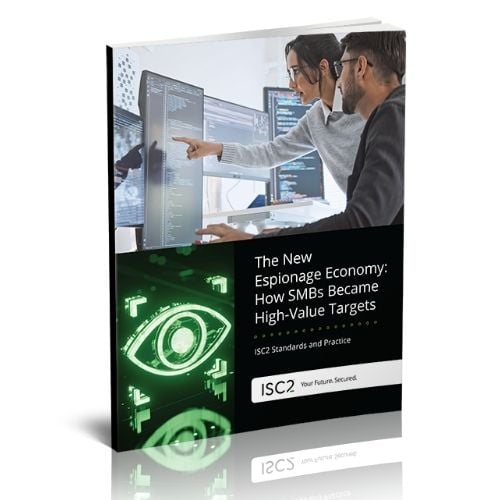
 State-sponsored cyber espionage has evolved. It’s no longer confined to governments or Fortune 500 companies. Today, small and medium-sized businesses (SMBs) have become prime targets, and the implications for cybersecurity professionals are profound. ISC2’s latest technical guidance paper, The New Espionage Economy: How SMBs Became High-Value Targets, explores this shift and offers actionable strategies to defend against emerging threats.
Why SMBs Are Being Targeted
Modern adversaries increasingly view SMBs as “trusted nodes” within larger ecosystems. These organizations often hold credentials, supplier access, and sensitive data that can serve as steppingstones to more lucrative targets. Unlike large enterprises, SMBs can lack advanced defenses, making them attractive entry points for state-backed actors seeking long-term strategic leverage.
Espionage campaigns have also changed in character. They now blend data theft, disruption, and disinformation, often disguised as routine IT issues or ransomware incidents. This stealth approach allows attackers to remain undetected for months, silently eroding trust and operational stability.
The Business Impact
The consequences of these attacks extend far beyond technical compromise.
SMBs face:
- Loss of customer and partner trust due to silent intrusions
- Supply chain contamination, exposing larger organizations through SMB environments
- Legal and regulatory exposure tied to data theft and underreporting
For cybersecurity professionals, this means that even organizations with modest budgets and limited staff must adopt enterprise-grade vigilance.
Actionable Steps for Defense
The paper emphasizes practical measures that SMBs—and those who support them—can implement immediately:
- Enforce phishing-resistant multi-factor authentication (MFA) across all accounts
- Map and protect high-value data, including credentials, supplier access, and contracts
- Maintain and review 90+ days of logs to detect long-dwell intrusions
- Reduce your public attack surface by auditing what your organization shares online.
- Subscribe to free government threat-alert services such as CISA, ENISA, and CERT.
Evolving Threat Landscape
The threat landscape is poised to become even more complex. Expect AI-driven espionage and blended operations to intensify through 2028, with adversaries leveraging automation for reconnaissance, phishing, and identity spoofing. Cybersecurity professionals must prepare for this next wave by reinforcing human-centric defenses and adopting proactive detection strategies.
For Members, By Members
ISC2 extends its gratitude to the 30 cybersecurity professionals, all CISSPs, for their participation and valuable support in developing this guidance document.
Members and Associates of ISC2 can access the guide by signing in to your account, visiting our new resource center containing Peer-Sourced Guidance Documents for Cybersecurity Professionals.
.png?h=420&iar=0&w=420)